Animal materials
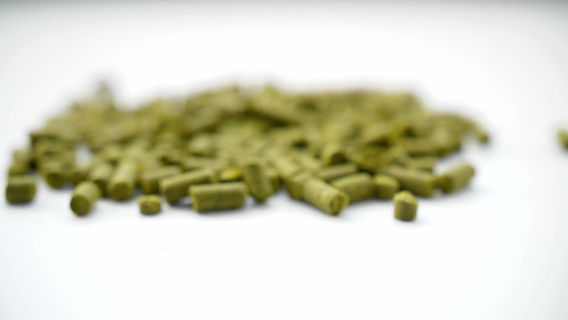
Materials such as sheep wool, chicken manure or horse manure make excellent fertilizer pellets.
Sheep's wool as an organic long-term fertilizer
Many garden owners want to manage their garden as naturally as possible and therefore do without mineral fertilizers. In most cases this is easily possible with your own compost. Horn meal or shavings can be used for higher nitrogen requirements. But not everyone has enough compost available. As an alternative, the trade offers various organic multi-nutrient fertilizers based on malt germs and vinasse (e.g. Maltaflor), cattle manure pellets (e.g. Oscorna) or bird manure (e.g. COMPO Natur Fertilizer Guano). What is less known is that sheep's wool is also a good fertilizer. This may be due to the fact that the wool is difficult to bring out directly from the sheep farmer. But now there is also pelleted sheep's wool, which is much easier to handle.
Properties of sheep's wool as fertilizer:
Sheep's wool pellets are made from unwashed sheep's wool and here preferably from the areas soiled with manure that are sorted out during shearing. This gives you a complex fertilizer that also slowly releases the nutrients. In addition to nitrogen, sheep's wool also contains potassium and some sulphur, with small amounts of phosphate and magnesium. Since phosphate is difficult to wash out, most soils have enough or even too much phosphate. Therefore, a compound fertilizer with a low phosphate content makes sense here.
Investigations have shown that with almost all organic fertilizers 75 percent of the nitrogen available to plants is released within the first 14 to 21 days, with sheep's wool, on the other hand, the release is delayed by up to ten days. Therefore, sheep's wool can be used well as a long-term fertilizer.
Additional properties: · Can store 3.5 times its own weight in water
· Should have a deterrent effect against snails (structure) and voles (smell)
· Soil conditioner
There are now also NPK fertilizers on the market (Compo), which consist of 50% sheep's wool pellets. The different mixture of the remaining 50% results in fertilizers with different nutrient contents, some of which differ significantly from pure sheep's wool pellets. These are sold as universal, rose, conifer or tomato fertilizer "with sheep's wool". The water storage capacity is particularly advantageous here.
Possible uses:
In principle, you can use sheep's wool to fertilize all plants that do not need acidic soil, i.e. everything except blueberries, rhododendrons and other ericaceous plants, because the pH value is too high for that. Even in soils with a high pH value (7 and higher), it is better to use a less alkaline fertilizer. Because of the high nitrogen content, sheep's wool is particularly suitable for heavy consumers. It is ideal for plants with a cultivation period of 10 to 14 weeks, e.g. for potatoes, peppers, tomatoes, sweet corn or types of cabbage, as the nutrients are only gradually released. But sheep's wool can also be used in perennial beds or for potted plants. However, you should avoid using this fertilizer for houseplants, as the inherent odor can have a disruptive effect in the room.
Output:
In principle, you can get unwashed sheep's wool directly from the source, i.e. from a sheep farmer. Dirty wool is often available here for free or at a small price. On the other hand, the application is a bit more complicated than with wool pellets, because the wool has to be pulled apart into small flakes. It is then either distributed over the entire surface of the bed or directly around the plants. A layer of earth is placed on top so that the wool flakes are not blown away or carried away by birds to build their nests. If you plant tomatoes or potatoes, for example, you put the plucked wool directly into the planting hole or into the planting furrow. If you use wool pellets, you also put these directly into the planting hole or scatter them on the bed, where you then work them in well by chopping them up. In any case, whether using raw wool or pellets, it must be watered well so that the "wool water reservoir" fills up. The wool swells as soon as it comes into contact with water and continuously releases its nutrients. Sheep's wool pellets can also be used as mulch material, as the wool is heavier in this pressed form and stays put. Beds mulched in this way are less attractive to most snails.
Prices and sources of supply for sheep's wool pellets:
Sheep's wool pellets or organic fertilizers containing sheep's wool are available in hardware stores, special garden centers and also online. The prices are graded according to quantity. For example, 2.5 kg of pure sheep's wool pellets cost around €18. Fertilizers containing sheep's wool, for example, are sold in 2kg packs for around €10. When comparing prices, the possibly different nutrient content and the amount actually required per plant or per m² must be taken into account.
Some reference addresses (more on the internet):Fertilizer pellet product and sales GmbH, Finsterwalder Str. 57, 01979 Lauchhammer, Tel.: 03574/767121, www.florapell.deRötberghof, Klaus Mebus, Hauptstrasse 36, 74423 Obersontheim, Telephone 07973/910380 www.roetberghof.deSchafwollspinnerei Höfer GmbH, Aiblingerstraße 1, 83075 Bad Feilnbach (Litzldorf), Tel.: 08066/362, www.schafwolle-hoefer.de
Source: https://www.dlr-rheinpfalz.rlp.de
What are leather shavings and leather dust and what can they be used for?
For the production of leather in tanneries, more than 40 work steps are necessary to get from animal skin to high-quality leather. After the preparation with washing, liming, scraping, descaling, staining and pickling, it goes to the tanning, where the miracle of transforming raw hide into durable leather happens. There are essentially 3 different tanning processes:
vegetable substances (vegetable tanning) with e.g. B. oak bark, mimosa or fruit
mineral v. a. with chromium salts or aluminum salts
synthetic
After tanning, the leather is pressed and split (so that the leather has a uniform thickness, this is called a waste product: leather shavings, then dyed, greased and dried. Now the leather feels quite stiff and therefore it has to be mechanically processed (milling and studs). Finally, the leather is finished, finished with special (fashionable) effects and then protected against water and dirt.
The resulting Leferfalz chips and dust can be pressed into pellets almost wet with a residual moisture content of >35%. They then go through drying so that they can be packed and stored until use.
With an LP22 DUO system, up to 1.2 tons of leather shavings and dust can be produced per hour, the volume is compressed by approx. 50%.
Leather pellets are very suitable as large-scale fertilizer and for storing water in the ground or as additional fuel for companies with special combustion rights, such as concrete works, brick works, steel production, etc.
Why pellet leather shavings?The volume reduction saves storage and transport costs, and an attractive and innovative fertilizer product is created with regard to sustainability and economy, and a cost-effective fuel is provided.
Main benefits of pelletizing leather shavings:
Volume reduction of about 2:1 for storage
Weight optimization for transport
Very easy handling: internal transport, decanting, loading and metered delivery
When processing leather, large amounts of leather dust are produced. These can be easily converted into fertilizer pellets by pelleting. The naturally tanned leather often has a high nitrogen content of up to 14% and is rich in zinc, manganese and iron, among other things. This material is therefore ideal as flower fertilizer - 100% organic.
Horse manure to fertilizer pellets
Each horse produces around 20-40kg of manure per day, over the year that is around 9 tons of horse manure per horse. There are currently almost 1 million horses living in Germany, leaving behind around 9 million tons of horse manure per year.
But what to do with all the horse dung?
The Fertilizer Ordinance 2020 tightens the conditions for horse owners. The horse husbandry must ensure safe manure storage, which must be designed in such a way that no ooze can escape. In addition, the horse owner must store the horse manure for at least 2 months before it can be spread on the field.
The largest horse stud farms in Germany have around 150 horses, which means that 3.75 tons of horse manure are accumulated every day, which must be stored or disposed of in accordance with the fertilizer ordinance.
Horse manure is sold from the farm for around 0.06 euros per kg. However, the demand is very low as customers prefer dried, packaged and doseable fertilizers.
By converting horse manure into premium organic fertilizer in pellet form, prices of 1-3 euros/kg can be achieved. The fertilizing effect of horse manure is excellent, rose breeders in particular swear by the power of horse manure.
Other benefits of horse manure pellets:
Shortening of costly muck storage
Space savings through volume reduction of 4:1
Fertilizing material is low odor, dry and solid
Additional income opportunity by selling the pellets => A stud farm with around 30 horses could produce around 200 tons of fertilizer pellets per year; at 1 euro per kg = 200,000 euros turnover
Alpacam dung to fertilizer pellets
Alpacas are a domesticated species of camel native to the South American Andes that are primarily bred for their wool. Alpaca wool has been used in Peru for a very long time to make high-quality, robust and, above all, warming textiles.
But not only the alpaca wool is a high-quality raw material, but also the alpaca manure. Because the "Alpaca Gold" or "Black Gold", as the alpaca manure is also called, has the highest and most balanced nutritional value of all animal manure.
The dried excretions of alpacas have excellent fertilizer properties and are among the best organic natural fertilizers. Alpaca dung is not only used in flower pots, planters or extensively in gardens. Agriculture has also discovered this unique fertilizer. Since the alpaca manure does not "burn" the plant, it can be used directly and is particularly suitable for sensitive plants such as roses, tomatoes, lettuce, courgettes, pumpkins, peppers or orchids.
If the alpaca manure is converted into valuable organic fertilizer pellets, it can also be sold in stores or online. Because it can be dosed for the end customer and is easier to apply to the plants.
Other advantages of alpaca manure and the conversion to fertilizer pellets:
- High levels of nitrogen (N), phosphorus (P) and potassium (K)
- Low water content compared to other fertilizers
- Absolutely pure organic fertilizer with no added chemicals
- No burning of plants and flowers like chicken and pigeon droppings
- Alpaca dung is very odorless
- No foreign seeds due to the alpaca's efficient digestive system
- Easy resale in small and large units
- Saving of storage space through extreme volume reduction
- Saving of transport and disposal costs
- Saving of fertilizer costs through self-sufficiency
- Additional income by selling the pellets
- Easy dosing
You can earn around 3€/kg with chicken manure pellets ✨
Advantages of chicken manure pellets as organic fertilizer:
- No burning of the plant due to pelleting 🔥
- Suitable for all plants 🍃
- Easy to use 👍
- Evenly distributes nutrients to the plant throughout the growth phase ⏱
- 100% natural ingredients
- Good dosage
- Protection against soil erosion
Insect protein powder consists of 100% mealworms and is an ideal food for sensitive animals that suffer from food intolerances. The insect protein powder is rich in proteins, which can strengthen the fur of the animals, as well as the muscles and immune system.
To make it easier to dose this powder, the protein powder can be converted into feed pellets. In this form, the feed pellets can be conveniently packaged for sale. Another advantage is the saving of storage space due to the extreme volume reduction during pelleting. If you produce these feed pellets yourself, you can also be 100% sure of the purity of the pellets.
MATERIAL TEST
Do you have questions about pelleting or are you unsure which solution suits you?
Call us at +49 9962 86734-0,
email us at: office@ecokraft.com
or fill out our inquiry form.
We are happy to help!