Recycled material & plastics
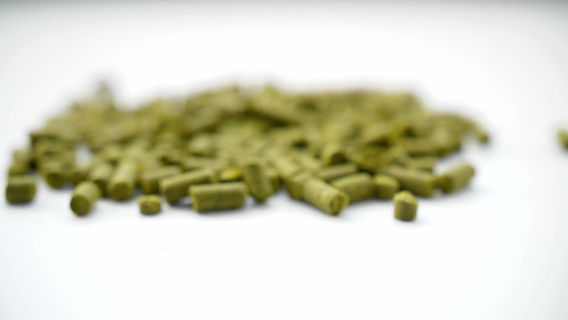
Convert waste material from plastics, cardboard, MDF, plastic or mineral wool into reusable recycled pellets.
Cardboard sections for heating pellets
Offcuts from cardboard production and old cardboard are suitable both for recycling and for the production of energy pellets.
In the first step, the cardboard cuttings or old cardboard are shredded in a cutting mill to approx. 6 mm flakes. This is followed by pelleting into energy pellets with a calorific value of 4.4 kW/kg to 4.6 kW/kg. In Germany, such heating pellets can be used in special pellet burners.
Key Benefits for Converting to Energy Pellets
-Saving of storage space through extreme volume reduction of approx. 12:1
-Saving of collection and disposal costs, as fewer trucks collect the material and bring it to recycling or disposal
-Saving heating costs through self-sufficiency
-Additional income opportunity through the sale of pellets (concrete plants, etc.)
-Increase of independence, the production and supply of heating material can be done on site
-Increasing sustainability by using operational resources and avoiding waste
PVC fibers and dust to PVC granules
When processing PVC, large amounts of fibers and dust can occur. In the pelleting process, these materials can be formed back into granules, so this material can be used again in the injection molding process.
Maximum compression of PU foam
PU foam waste material usually has to be disposed of by volume. Due to the compression of approx. 20:1, very large disposal areas and thus costs can be saved.
MDF dust to energy pellets
Medium-density fibreboard, often referred to as MDF board for short, usually consists of finely defibrated coniferous wood that is bonded with resins or glue. Large amounts of MDF dust are generated during the treatment and processing of MDF boards in the areas of building insulation and the furniture industry. This material can be used energetically again by pelleting.
Mineral wool residues to insulation granules
Mineral wool is the umbrella term for rock and glass wool and is ideal as an insulating material for heat and sound insulation in buildings. Stone wool is made from types of rock such as diabase, basalt or dolomite, while glass wool consists of 80% waste glass, dolomite, sand or soda.
The mineral insulation is considered mold-resistant and fire-resistant and collects further plus points thanks to its UV resistance and its diverse areas of application. In addition to walls, ceilings and roofs, floors, heating and hot water pipes, district heating pipes, boilers and equipment can also be insulated.
When constructing a building or performing energy-related renovation, excess material is cut off when the mineral wool insulation boards are inserted and accumulates as waste material. The disposal of these residual materials is associated with high costs and not every landfill accepts mineral wool.
However, if the mineral wool sections are crushed in a cutting mill and then pelletized into insulating granules, they can be returned to the manufacturer for further processing and recycling. All in the spirit of a resource-saving, sustainable and cost-efficient circular economy.
Key benefits of converting to insulation granules
Saving of transport costs & storage spacethrough extreme volume reduction of approx. 10:1
Additional income opportunity through the sale of the recycled rockwool
Increase in sustainability & savings in disposal costs, through processing and recycling into new mineral wool insulation material and avoidance of waste
Wood fiber insulation boards to energy pellets
Wood fiber insulation boards are among the organic and environmentally friendly insulation materials made from plant fibers and are made from coniferous wood waste.
Sections of this insulation board, which are produced during processing in construction, are ideal for the production of energy pellets. In the first step, the wood fiber insulation boards are chopped up in a chipper and then chopped up again in a cutting mill to approx. 10 mm flakes. This is followed by pelleting into energy pellets with a calorific value of approx. 4.4 - 4.6 kW.
The plastic problem is omnipresent, because plastic is everywhere. Whether in rivers, on land or in the oceans, enormous amounts of plastic waste are already polluting the entire planet.
More than 400 million tons of plastic are produced worldwide every year. Disposable products and packaging make up the largest part of this. Many everyday products are usually only used once before they end up in the garbage. According to industry forecasts, total plastic production is set to double by 2035 and triple by 2050.
Many companies have recognized the problem and have already specialized in converting this single-use plastic back into high-quality products such as yoga pants, bags, hats or dishes. Upcycling is the motto here!
By crushing and subsequent pelleting, the single-use plastic can be converted into recyclable plastic pellets and thus ideally used for further processing. Another advantage is that disposal and transport costs can be saved due to the extreme volume reduction.
And the most important point: you contribute to avoiding waste and protecting the environment.
In 2020, the German paper industry produced around 21.4 million tons of paper, paperboard and cardboard. Around 16.9 million tons of waste paper were used for this. In a print shop, up to 5,000 printed products of all kinds are produced every day. In addition to the desired printed matter, this also creates a lot of waste, including paper scraps such as edge strips or die-cut sheets. The more paper that is recycled as part of the recycling process, the less wood is used to produce the paper.
Another alternative to not simply disposing of this paper residue, but to return it to the cycle in an environmentally friendly and resource-friendly way, is to convert it into high-quality energy pellets. These can then even be used for the company's own heating supply.
MATERIAL TEST
Do you have questions about pelleting or are you unsure which solution suits you?
Call us at +49 9962 86734-0,
email us at: office@ecokraft.com
or fill out our inquiry form.
We are happy to help!