Food waste
Scrap baked goods and bread can be converted into animal feed or energy pellets.
Altbrot (in Germany also: Return bread) is bread that is left over in bakeries and in retail at the end of a sales day and is sorted out as food or whose sell-by date has passed .
Bread storage is no longer as important as it was in the past. In the past, especially in home bakeries, baking was not done every day, but at different intervals, which required a considerable amount of storage. Today, a wide range of fresh baked goods is available every day. The abundance of our industrial society has changed the wishes of customers, they demand fresh products. In the end, the unsaleable old bread usually only has to be disposed of at the expense of the manufacturer/baker.
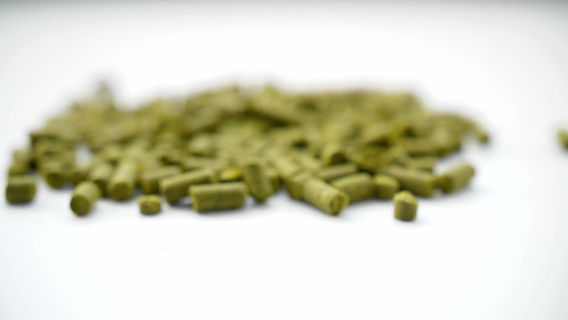
By pelleting stale bread, it is possible to reuse baked goods for various applications and avoid costly disposal for the manufacturer. Rather, by pelleting biomass, it is possible to join new sales markets and contribute to sustainable environmental protection.
Areas of application for stale bread pellets:
Fuel
Feed in animal husbandry
Energy production
2 kg of stale bread produce approx. 10 kw/h of energy, which in turn corresponds to approx. 1 liter of heating oil! This property makes albrot an excellent fuel and can reduce energy costs by up to 50% and up to 91% CO2 emissions at the manufacturer through energy recovery (see video)!
During the pelleting by our Ecokraft pelleting machine model series, almost 100 degrees Celsius arise during processing, which brings the biomass into the desired shape and makes it durable for a long time.
4 parts of rolls correspond to approx. 1 part of pellets, which means that the required storage space is reduced by approx. 75%!
All pelleting machine models are characterized by their excellent workmanship and the permanent high-performance output. In addition, we completely dispense with binding agents in the manufacture of pellets and are thus clearly distinguishable from the market!
When making pasta, such as pizza, tarte flambée or noodles, etc., there are always leftovers that cannot be reused. By rolling out the dough several times, it gets thinner and thinner and eventually too brittle for further processing. Overproduction is also sorted out because the dough has to be fresh.
These leftovers, which are still valuable, are usually disposed of for a fee, which is not only very unprofitable from an economic point of view, but also causes unnecessary waste.
By pelleting leftover dough, it is possible to reuse it for various applications and avoid costly disposal for the manufacturer. During pelleting, almost 100 degrees Celsius are created, which brings the biomass into the desired shape and makes it durable.
In addition, pelleting makes it possible to join new sales markets and contribute to sustainable environmental protection.
According to the motto: Reduce - Reuse - Recycle!
MATERIAL TEST
Do you have questions about pelleting or are you unsure which solution suits you?
Call us at +49 9962 86734-0,
email us at: office@ecokraft.com
or fill out our inquiry form.
We are happy to help!